•  

"Total Dictation" held in Russia

STORY: "Total Dictation" held in Russia SHOOTING TIME: April 20, 2024 DATELINE: April 21, 2024 LENGTH: 00:01:07 LOCATION: ST. PETERSBURG, Russia CATEGORY: CULTURE SHOTLIST: 1. various of the "Total Dictation" event in St. Petersburg, Russia STORYLINE: The International Russian Language Grammar Test "Total Dictation" was held simultaneously on Saturday in dozens of cities in Russia and worldwide. During the annual cultural event, people got together to write down a dictation in the Russian language, which will be checked and nominated by a special grammar commission. According to the organizer, this year's event took place in over 40 countries and regions. Total Dictation was created to draw attention to literacy and to develop a culture of literate writing in the Russian language. The first such event was organized by philology students from Novosibirsk, Russia on March 11, 2004. Since 2012, the Total Dictation has become an international event that was supported by Russians abroad and people studying

  •  
Boxing: Ex-Olympic, WBA middleweight champ Murata

Boxing: Ex-Olympic, WBA middleweight champ Murata

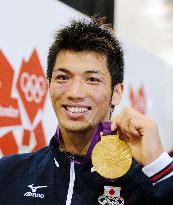
File photo taken on Aug. 11, 2012 shows Japanese boxer Ryota Murata posing for a photo with the gold medal following his victory in the men's middleweight final at the London Olympics. Murata, the first Japanese boxer to win both an Olympic gold medal and a professional world title, announced his retirement on March 28, 2023.

  •  
Antinuclear activity in Tokyo

Antinuclear activity in Tokyo

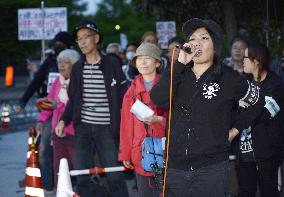
TOKYO, Japan - Photo taken April 25, 2014, shows Misao Redwolf (holding microphone), an illustrator whose real name is undisclosed, at a rally against nuclear power generation in front of the prime minister's office in Tokyo. Redwolf is one of the organizers of the antinuclear rallies which have been held on Friday nights near the premier's office and the Diet building since March 2012, a year after the outbreak on March 11, 2011, of the nuclear disaster at the Fukushima Daiichi power plant in the aftermath of the magnitude 9.0 earthquake and tsunami.

  •  
Antinuclear activity in Tokyo

Antinuclear activity in Tokyo

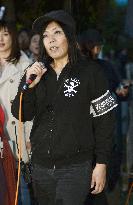
TOKYO, Japan - Photo taken April 25, 2014, shows Misao Redwolf, an illustrator whose real name is undisclosed, at a rally against nuclear power generation in front of the prime minister's office in Tokyo. Redwolf is one of the organizers of the antinuclear rallies which have been held on Friday nights near the premier's office and the Diet building since March 2012, a year after the outbreak on March 11, 2011, of the nuclear disaster at the Fukushima Daiichi power plant in the aftermath of the magnitude 9.0 earthquake and tsunami.

  •  
Father of Olympic wrestling champion Yoshida dies

Father of Olympic wrestling champion Yoshida dies

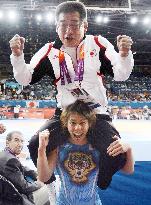
TOKYO, Japan - File photo taken in August 2012 shows Japan's Saori Yoshida (bottom) celebrating with her father and coach Eikatsu on her shoulders after winning her third consecutive gold medal in the women's wrestling 55-kilogram class at the London Olympics. Eikatsu Yoshida, 61, was found collapsed in his car in Tsu, Mie Prefecture and later confirmed dead at a hospital on March 11, 2014.

  •  
ANA to earn 11 Haneda int'l slots vs. JAL's 5

ANA to earn 11 Haneda int'l slots vs. JAL's 5

NARITA, Japan - File photo taken in September 2012 at Narita airport, near Tokyo, shows the tails of a Japan Airlines plane (front) and an All Nippon Airways plane. All Nippon Airways Co. will receive 11 slots in the expanded international flight schedule from March 2014 at Tokyo's Haneda airport and Japan Airlines Co. five, following ANA's call for a "fair" allocation compared to its publicly salvaged rival, sources familiar with the matter said Oct. 2, 2013.

  •  
2 years after quake

2 years after quake

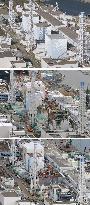
FUKUSHIMA, Japan - Aerial photos taken by Kyodo News show Fukushima Daiichi Nuclear Power Station in Fukushima Prefecture in October 2008 (top), on Feb. 26, 2012 (center), about a year after a nuclear crisis triggered by the earthquake and tsunami on March 11, 2011, and on March 3, 2013. From back to front are the buildings housing the No. 1 to No. 4 reactors. The bottom photo shows a cover on the No. 1 reactor building used to prevent radioactive particles from being dispersed. Cranes are at work at No. 3 and No. 4 reactor buildings.

  •  
2 years after quake

2 years after quake

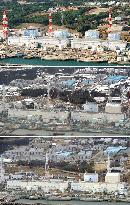
FUKUSHIMA, Japan - Aerial photos taken by Kyodo News show Fukushima Daiichi Nuclear Power Station in Fukushima Prefecture in December 2000 (top), on Feb. 26, 2012 (center), about a year after a nuclear crisis triggered by the earthquake and tsunami on March 11, 2011, and on March 3, 2013. From right to left are the buildings housing the No. 1 to No. 4 reactors.

  •  
Driftwood violins keep alive memories of prequake days

Driftwood violins keep alive memories of prequake days

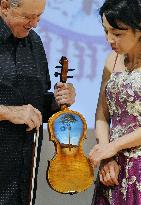
TOKYO, Japan - Polish violinist Nicolas Chumachenco (L) shows the back of his violin, on which a picture of the famed "miracle pine tree" is drawn. It was the only tree that survived the devastating tsunami that swept away a pine forest on the coast of Rikuzentakata, Iwate Prefecture, on March 11, 2011, when the Great East Japan Earthquake occurred. Photo taken Nov. 3, 2012 in Ikoma, Nara Prefecture. (Photo by Yukie Nishizawa)

  •  
Search for missing from March 2011 disaster

Search for missing from March 2011 disaster

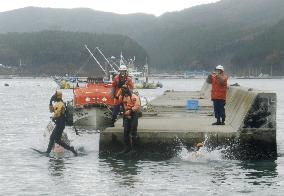
SENDAI, Japan - Photo taken in the town of Minamisanriku, Miyagi Prefecture, on Nov. 11, 2012, shows regional coast guard members conducting an intensive search for people still listed as missing a year and eight months after the massive earthquake and tsunami in Japan's northeast.

  •  
9/11 group seeks continued support for Tohoku disaster victims

9/11 group seeks continued support for Tohoku disaster victims

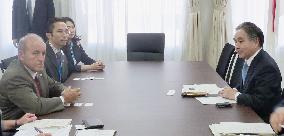
TOKYO, Japan - Lee Ielpi (far L), head of the September 11th Families' Association, meets reconstruction minister Tatsuo Hirano (R) in Tokyo on Oct. 26, 2012. Bereaved families of the victims of the Sept. 11, 2001, terrorist attacks in the United States called for continued support for survivors of the March 2011 earthquake and tsunami that hit eastern and northeastern Japan in their meeting with the Japanese minister.

  •  
9/11 group gives monument to Japanese city

9/11 group gives monument to Japanese city

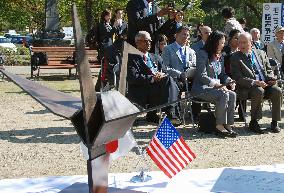
FUKUSHIMA, Japan - Photo taken Oct. 25, 2012, in Koriyama, Fukushima Prefecture, shows a monument (front) in the shape of a crane, with a wing span of 80 centimeters, made from debris of the World Trade Center, which collapsed in the Sept. 11, 2001 terrorist attacks. An association of bereaved families of victims of the attacks donated the monument the same day to the city as a symbol of its recovery efforts from the March 2011 earthquake and tsunami in northeastern Japan.

  •  
1 and a half years after quake

1 and a half years after quake

SENDAI, Japan - Combination photos from a Kyodo News helicopter show an area in the city of Soma, Fukushima Prefecture, on March 13, 2011 (top), shortly after the March 11, 2011, Great East Japan Earthquake and subsequent tsunami, and about one and a half years later on Sept. 4, 2012 (bottom).

  •  
1 and a half years after quake

1 and a half years after quake

SENDAI, Japan - Combination photos from a Kyodo News helicopter show an area in the city of Iwaki, Fukushima Prefecture, on April 7, 2011 (top), shortly after the March 11, 2011, Great East Japan Earthquake and subsequent tsunami, and about one and a half years later on Sept. 4, 2012 (bottom).

  •  
1 and a half years after quake

1 and a half years after quake

SENDAI, Japan - Combination photos from a Kyodo News helicopter show an area in the city of Iwaki, Fukushima Prefecture, on April 10, 2011 (top), shortly after the March 11, 2011, Great East Japan Earthquake and subsequent tsunami, and about one and a half years later on Sept. 4, 2012 (bottom).

  •  
1 and a half years after quake

1 and a half years after quake

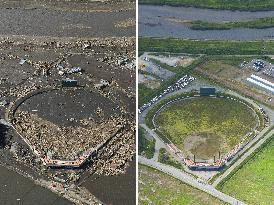
SENDAI, Japan - Combination photos from a Kyodo News helicopter show a ballpark in the city of Minamisoma, Fukushima Prefecture, on March 12, 2011 (L), shortly after the March 11, 2011, Great East Japan Earthquake and subsequent tsunami, and about one and a half years later on Sept. 4, 2012 (R).

  •  
1 and a half years after quake

1 and a half years after quake

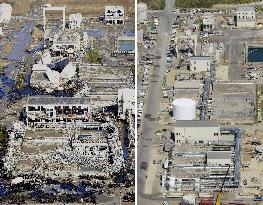
SENDAI, Japan - Combination photos from a Kyodo News helicopter show the Haramachi thermal power plant in the city of Minamisoma, Fukushima Prefecture, on March 12, 2011 (L), shortly after the March 11, 2011, Great East Japan Earthquake and subsequent tsunami, and about one and a half years later on Sept. 4, 2012 (R).

  •  
1 and a half years after quake

1 and a half years after quake

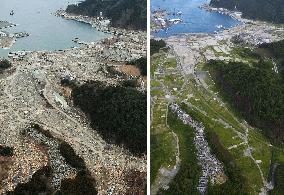
SENDAI, Japan - Combination photos from a Kyodo News helicopter show an area in town of Onagawa, Miyagi Prefecture, on March 22, 2011 (L), after the March 11, 2011, Great East Japan Earthquake and subsequent tsunami, and about one and a half years later on Sept. 3, 2012 (R). Many of the buildings damaged by the tsunami have been removed.

  •  
1 and a half years after quake

1 and a half years after quake

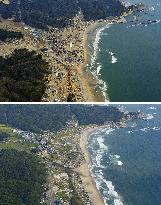
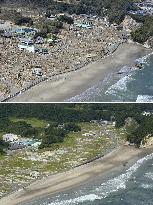
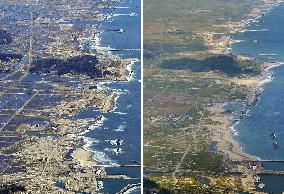
SENDAI, Japan - Combination photos from a Kyodo News helicopter show a coastal area stretching from the town of Shinchi, Fukushima Prefecture (front), to the town of Yamamoto, Miyagi Prefecture (back), on March 28, 2011 (L), shortly after the March 11, 2011, Great East Japan Earthquake and subsequent tsunami, and about one and a half years later on Sept. 4, 2012 (R).

  •  
1 and a half years after quake

1 and a half years after quake

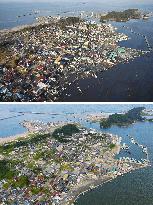
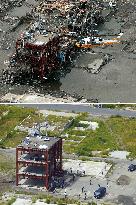
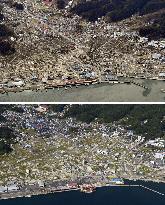
SENDAI, Japan - Combination photos from a Kyodo News helicopter show an area in the town of Minamisanriku, Miyagi Prefecture, on March 12, 2011 (top), after the March 11, 2011, Great East Japan Earthquake and subsequent tsunami, and about one and a half years later on Sept. 3, 2012 (bottom). Many people have visited the Minamisanriku municipal government's symbolic disaster office building seen in the photos to mourn the victims of the disaster.

  •  
1 and a half years after quake

1 and a half years after quake

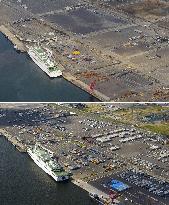
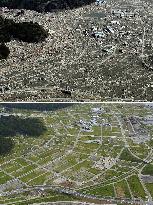
SENDAI, Japan - Combination photos from a Kyodo News helicopter show Sendai port in Miyagi Prefecture on March 25, 2011 (top), after the March 11, 2011, Great East Japan Earthquake and subsequent tsunami, and about one and a half years later on Sept. 4, 2012 (bottom).

  •  
1 and a half years after quake

1 and a half years after quake

ISHINOMAKI, Japan - Combination photos from a Kyodo News helicopter show an area in Ishinomaki, Miyagi Prefecture, on March 23, 2011 (L), after the March 11, 2011, Great East Japan Earthquake and subsequent tsunami, and about one and a half years later on Sept. 3, 2012 (R). Many children died or went missing as the tsunami hit Okawa Elementary School which stood in the area.

  •  
1 and a half years after quake

1 and a half years after quake

SENDAI, Japan - Combination photos from a Kyodo News helicopter show an area in town of Onagawa, Miyagi Prefecture, on April 10, 2011 (L), after the March 11, 2011, Great East Japan Earthquake and subsequent tsunami, and about one and a half years later on Sept. 3, 2012 (R). Many of the buildings damaged by the tsunami have been removed.

  •  
1 and a half years after quake

1 and a half years after quake

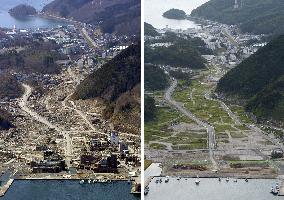
SENDAI, Japan - Combination photos from a Kyodo News helicopter show an area in the town of Yamada, Iwate Prefecture, on March 28, 2011 (top), after the March 11, 2011, Great East Japan Earthquake, and about one and a half years later on Sept. 3, 2012 (bottom).

  •  
1 and a half years after quake

1 and a half years after quake

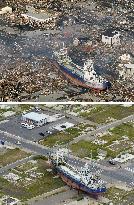
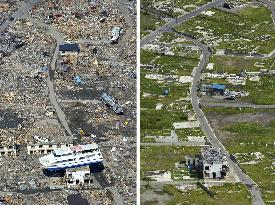
SENDAI, Japan - Combination photos from a Kyodo News helicopter show an area in Kesennuma, Miyagi Prefecture, on March 12, 2011 (top), after the March 11, 2011, Great East Japan Earthquake and tsunami, and about one and a half years later on Sept. 3, 2012 (bottom). An improvised convenience store outlet has begun operating near the fishing boat carried ashore by the tsunami.

  •  
1 and a half years after quake

1 and a half years after quake

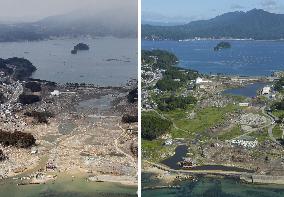
SENDAI, Japan - Combination photos from a Kyodo News helicopter show an area in the town of Minamisanriku, Miyagi Prefecture, on March 13, 2011 (L), after the March 11, 2011, Great East Japan Earthquake and subsequent tsunami, and about one and a half years later on Sept. 3, 2012 (R). A shopping area has been established at bottom R.

  •  
1 and a half years after quake

1 and a half years after quake

SENDAI, Japan - Combination photos from a Kyodo News helicopter show an area in Rikuzentakata, Iwate Prefecture, on March 23, 2011 (top), after the March 11, 2011, Great East Japan Earthquake, and about one and a half years later on Sept. 3, 2012 (bottom).

  •  
1 and a half years after quake

1 and a half years after quake

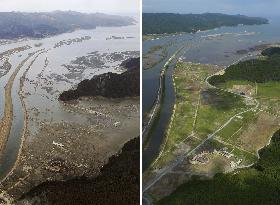
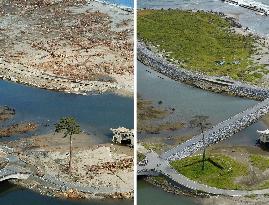
SENDAI, Japan - Combination photos from a Kyodo News helicopter show an area in Rikuzentakata, Iwate Prefecture, on March 23, 2011 (L), after the March 11, 2011, Great East Japan Earthquake, and about one and a half years later on Sept. 3, 2012 (R). In the photos is the so-called ''miracle pine,'' the only tree that survived the disaster in the area though it withered later.

  •  
1 and a half years after quake

1 and a half years after quake

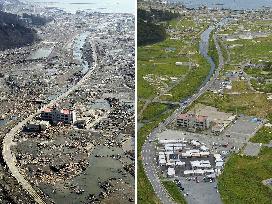
SENDAI, Japan - Combination photos from a Kyodo News helicopter show an area in the town of Otsuchi, Iwate Prefecture, on April 10, 2011 (L), after the March 11, 2011, Great East Japan Earthquake, and about one and a half years later on Sept. 3, 2012 (R).

  •  
1 and a half years after quake

1 and a half years after quake

SENDAI, Japan - Combination photos from a Kyodo News helicopter show an area in the town of Yamada, Iwate Prefecture, on March 23, 2011 (L), after the March 11, 2011, Great East Japan Earthquake, and about one and a half years later on Sept. 3, 2012 (R).

  •  
Students from quake-hit Tohoku visit Ground Zero in N.Y.

Students from quake-hit Tohoku visit Ground Zero in N.Y.

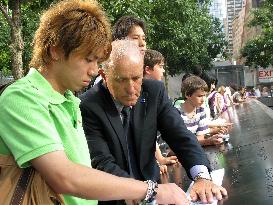
NEW YORK, United States - Tsubasa Sugeno (L), a university student hailing from Nihonmatsu, Fukushima Prefecture, and Lee Ielpi, president of the September 11th Families' Association, trace together names of Japanese victims of the Sept. 11 terror attacks engraved on the stone monument at the World Trade Center site in New York on Aug. 13, 2012. Students hailing from the prefectures of Iwate, Miyagi and Fukushima, which were severely hit by the 2011 March earthquake and tsunami disasters, visited the site and met the bereaved families of the 9/11 victims.

  •  
Students from quake-hit Tohoku visit Ground Zero in N.Y.

Students from quake-hit Tohoku visit Ground Zero in N.Y.

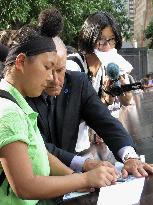
NEW YORK, United States - Ayaka Ogawa (L), who graduated from a senior high school in Iwate Prefecture, and Lee Ielpi, president of the September 11th Families' Association, trace together names of Japanese victims of the Sept. 11 terror attacks engraved on the stone monument at the World Trade Center site in New York on Aug. 13, 2012. Students hailing from the prefectures of Iwate, Miyagi and Fukushima, which were severely hit by the 2011 March earthquake and tsunami disasters, visited the site and met the bereaved families of the 9/11 victims.

  •  
Japanese students from quake-hit areas begin U.S. tour

Japanese students from quake-hit areas begin U.S. tour

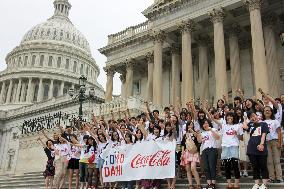
WASHINGTON, United States - High school students from Iwate, Miyagi and Fukushima prefectures, which were devastated by the March 11 earthquake of 2011, gather for a photo on Capitol Hill in Washington on July 24, 2012. Sixty high school students from the quake-hit areas started a U.S. tour the same day as part of a bilateral exchange-promotion program dubbed the Tomodachi initiative.

  •  
Japanese students from quake-hit areas begin U.S. tour

Japanese students from quake-hit areas begin U.S. tour

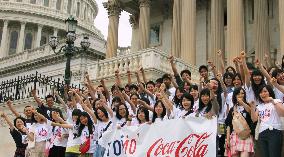
WASHINGTON, United States - High school students from Iwate, Miyagi and Fukushima prefectures, which were devastated by the March 11 earthquake of 2011, gather for a photo on Capitol Hill in Washington on July 24, 2012. Sixty high school students from the quake-hit areas started a U.S. tour the same day as part of a bilateral exchange-promotion program dubbed the Tomodachi initiative.

  •  
Emperor, empress in quake-hit village

Emperor, empress in quake-hit village

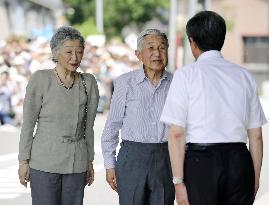
SAKAE, Japan - Emperor Akihito (C) and Empress Michiko (L) visit the village government office of Sakae, Nagano Prefecture, on July 19, 2012. The village was hit by a strong earthquake a day after the March 11, 2011 earthquake and tsunami in northeastern Japan.

  •  
Abandoned animals in Fukushima

Abandoned animals in Fukushima

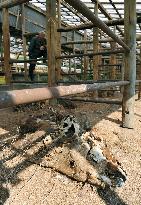
TOKYO, Japan - In this photo taken in the town of Tomioka, Fukushima Prefecture, on May 19, 2012, a cattle beast lies starved to death after its owner abandoned it in a barn. The town remains nearly deserted as the government in April 2011 designated it and other municipalities within a 20-kilometer ring around the crippled Fukushima Daiichi nuclear power plant as a no-go zone. The plant's reactors suffered meltdowns after being struck by the March 11, 2011, earthquake and tsunami, spewing massive amounts of radioactive materials into the air and sea.

  •  
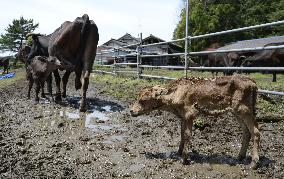
Abandoned animals in Fukushima

Abandoned animals in Fukushima

TOKYO, Japan - In this photo taken in the town of Tomioka, Fukushima Prefecture, on June 23, 2012, a calf (front) looks almost skeletal because its mother is too weak to breastfeed it. The town remains nearly deserted as the government in April 2011 designated it and other municipalities within a 20-kilometer ring around the crippled Fukushima Daiichi nuclear power plant as a no-go zone. The plant's reactors suffered meltdowns after being struck by the March 11, 2011, earthquake and tsunami, spewing massive amounts of radioactive materials into the air and sea.

  •  
Man caring for abandoned cattle in Fukushima

Man caring for abandoned cattle in Fukushima

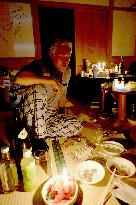
TOKYO, Japan - In this photo taken in the town of Tomioka, Fukushima Prefecture, on June 23, 2012, Naoto Matsumura, who cares for cattle abandoned by their owners, relaxes at his home after finishing his day's work of tending to pets and livestock. Without electricity, he relies on candles to light his room. The town remains nearly deserted as the government in April 2011 designated it and other municipalities within a 20-kilometer ring around the crippled Fukushima Daiichi nuclear power plant as a no-go zone. The plant's reactors suffered meltdowns after being struck by the March 11, 2011, earthquake and tsunami, spewing massive amounts of radioactive materials into the air and sea.

  •  
Abandoned animals in Fukushima

Abandoned animals in Fukushima

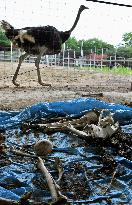
TOKYO, Japan - In this photo taken in the town of Okuma, Fukushima Prefecture, on May 20, 2012, an ostrich walks by the remains of another that starved to death after they were left abandoned at a breeding facility. In April 2011, the government designated Okuma and other municipalities within a 20-kilometer ring around the crippled Fukushima Daiichi nuclear power plant as a no-go zone. The plant's reactors suffered meltdowns after being struck by the March 11, 2011, earthquake and tsunami, spewing massive amounts of radioactive materials into the air and sea.

  •  
Abandoned animals in Fukushima

Abandoned animals in Fukushima

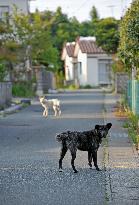
TOKYO, Japan - Photo taken in the town of Tomioka, Fukushima Prefecture, on May 21, 2012, shows dogs that have been abandoned by their owners. The town remains nearly deserted as the government in April 2011 designated it and other municipalities within a 20-kilometer ring around the crippled Fukushima Daiichi nuclear power plant as a no-go zone. The plant's reactors suffered meltdowns after being struck by the March 11, 2011, earthquake and tsunami, spewing massive amounts of radioactive materials into the air and sea.

  •  
Man caring for abandoned cattle in Fukushima

Man caring for abandoned cattle in Fukushima

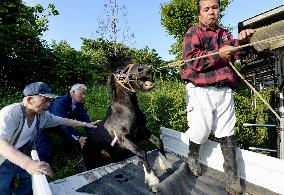
TOKYO, Japan - In this photo taken in the town of Tomioka, Fukushima Prefecture, on June 22, 2012, Naoto Matsumura (C) and his friend Kazuo Endo (R) help a pony onto a truck so he can take it home and care for it, doing so at the request of a resident (L) who has returned home temporarily. The town remains nearly deserted as the government in April 2011 designated it and other municipalities within a 20-kilometer ring around the crippled Fukushima Daiichi nuclear power plant as a no-go zone. The plant's reactors suffered meltdowns after being struck by the March 11, 2011, earthquake and tsunami, spewing massive amounts of radioactive materials into the air and sea.

  •  
Man caring for abandoned cattle in Fukushima

Man caring for abandoned cattle in Fukushima

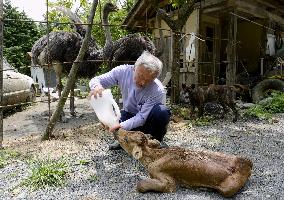
TOKYO, Japan - In this photo taken in the town of Tomioka, Fukushima Prefecture, on June 23, 2012, Naoto Matsumura, who cares for cattle abandoned by their owners, gives milk to a weakened calf via a feeding bottle. Behind him are the ostriches and the dog he keeps after their owners abandoned them. The town remains nearly deserted as the government in April 2011 designated it and other municipalities within a 20-kilometer ring around the crippled Fukushima Daiichi nuclear power plant as a no-go zone. The plant's reactors suffered meltdowns after being struck by the March 11, 2011, earthquake and tsunami, spewing massive amounts of radioactive materials into the air and sea.

  •  
Large tank being dissembled

Large tank being dissembled

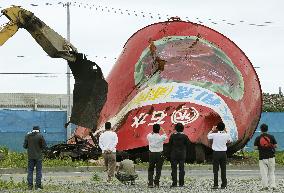
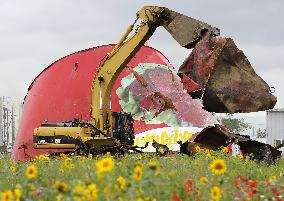
ISHINOMAKI, Japan - An 11-meter-tall fish oil tank shown being dissembled in Ishinomaki, Miyagi Prefecture, on June 30, 2012. The tank, painted like a huge whale meat can, had sat on its side on the median of a road since being washed away from a seafood factory by the March 2011 tsunami.

  •  
Large tank being dissembled

Large tank being dissembled

ISHINOMAKI, Japan - An 11-meter-tall fish oil tank shown being dissembled in Ishinomaki, Miyagi Prefecture, on June 30, 2012. The tank, painted like a huge whale meat can, had sat on its side on the median of a road since being washed away from a seafood factory by the March 2011 tsunami.

  •  
Residents in Miyagi plant trees on hill made of disaster debris

Residents in Miyagi plant trees on hill made of disaster debris

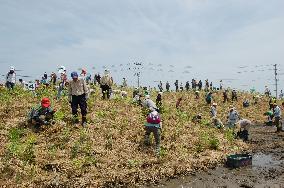
SENDAI, Japan - People take part in tree-planting in Iwanuma, Miyagi Prefecture, on May 26, 2012, on a roughly 4-meter high hill made of debris from the March 11, 2011, earthquake and tsunami and built as an experimental wall against tidal waves.

  •  
Residents in Miyagi plant trees on hill made of disaster debris

Residents in Miyagi plant trees on hill made of disaster debris

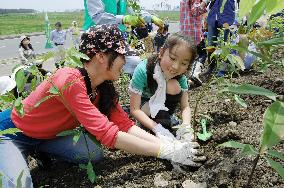
SENDAI, Japan - A woman and her daughter take part in tree-planting in Iwanuma, Miyagi Prefecture, on May 26, 2012, on a roughly 4-meter high hill made of debris from the March 11, 2011, earthquake and tsunami and built as an experimental wall against tidal waves.

  •  
Panasonic logs record net loss

Panasonic logs record net loss

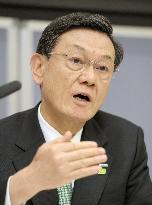
OSAKA, Japan - Panasonic Corp. President Fumio Otsubo speaks during a press conference in Hirakata, Osaka Prefecture, on May 11, 2012. The electronics maker reported its largest-ever group net loss of 772.17 billion yen for the business year ended March 2012, citing factors including massive losses in its TV manufacturing operations, but said Panasonic expects to return to the black in the current business year through restructuring.

  •  
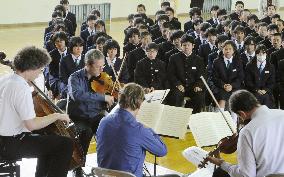
German musical ensemble holds concert in quake-hit Japan city

German musical ensemble holds concert in quake-hit Japan city

ISHINOMAKI, Japan - Members of the German chamber music ensemble Leipzig String Quartet perform on May 8, 2012, before students at Mono Junior High School in Ishinomaki, Miyagi Prefecture, devastated by the March 11 earthquake and tsunami in 2011.

  •  
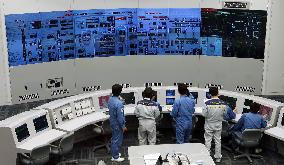
Japan's last nuclear reactor goes offline

Japan's last nuclear reactor goes offline

SAPPORO, Japan - Operators at 11:03 p.m. on May 5, 2012, look at displays in the central control room for the No. 3 reactor at Hokkaido Electric Power Co.'s Tomari nuclear power plant in the village of Tomari, Hokkaido, after Japan's last operating commercial reactor went offline for mandatory routine maintenance. The nation was left without electricity generated by nuclear power for the first time in 42 years, in the wake of the Fukushima nuclear crisis triggered by the March 2011 earthquake and tsunami. (Pool photo)

  •  
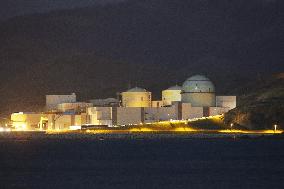
Japan's last nuclear reactor goes offline

Japan's last nuclear reactor goes offline

SAPPORO, Japan - Photo taken at 11:08 p.m. on May 5, 2012, shows Hokkaido Electric Power Co.'s Tomari nuclear power plant in the village of Tomari, Hokkaido. The building housing the No. 3 reactor can be seen to the right. The photo was taken shortly after the reactor, Japan's last operating commercial nuclear reactor, went offline for mandatory routine maintenance, leaving the nation without electricity generated by nuclear power for the first time in 42 years, in the wake of the Fukushima nuclear crisis triggered by the March 2011 earthquake and tsunami.

  • Main
  • Top
  • Editorial
  • Creative
  • About Us
  • About ILG
  • Terms of use
  • Company
  • BEHIND
  • Price List
  • Single Plan
  • Monthly Plan
  • Services
  • Shooting
  • Rights Clearance
  • Support
  • FAQ
  • How To Buy
  • Contact Us
  • Become a Partner

© KYODO NEWS IMAGES INC

All Rights Reserved.

  • Editorial
  • Olympics
  • News
  • Sports
  • Japan
  • Tech
  • Royal
  • Disaster
  • NorthKorea
  • Old Japan
  • SNS
  • Creative
  • Food
  • Japan
  • Landscape
  • Animal
  • Popular
  • #Ukraine
  • #Russia
  • #coronavirus
  • #N. Korea
  • #Thailand
  • #China
  • #Ukraine
  • #Russia
  • #coronavirus
  • #N. Korea
  • #Thailand
  • #China
  • Food
  • Japan
  • Landscape
  • Animal
  • Olympics
  • News
  • Sports
  • Japan
  • Tech
  • Royal
  • Disaster
  • NorthKorea
  • Old Japan
  • SNS